Cooney Coil & Energy logo
When to Replace Commercial HVAC Coils

When to Replace Commercial HVAC Coils

Recognizing the Signs: When You Should Replace Commercial HVAC Coils

Maintaining the right temperature in your facility is essential for ensuring the comfort and safety of those living or working within. That’s why it’s important to have a properly functioning HVAC system with coils that are regularly inspected, serviced and replaced when necessary.

Unfortunately, coils can fail prematurely due to freeze damage or other factors such as incorrect selection, corrosion or lack of maintenance. Understanding the signs that indicate when it’s time to replace or repair your HVAC coils is essential for your facility.

In this article, we’ll provide you with an overview of indicators that signal it might be time to replace or repair your HVAC coils so you can keep your building comfortable and safe at all times. Let’s get started!

Reduced System Efficiency

A decrease in system efficiency is often the first sign that your HVAC coils may need to be replaced or repaired. If you notice an increase in energy consumption without significant changes in usage patterns, this can indicate a problem with your coils. In addition, if any areas of your building are not being adequately heated or cooled, this could also indicate a problem with your coils.

Frequent Breakdowns and Repairs

If you’re experiencing frequent breakdowns and repairs with your HVAC system, it’s time to evaluate whether coil replacement or repair is the most cost-effective solution. The costs associated with regular repairs can add up quickly, making it more financially sensible to invest in replacing the coils entirely.

Be sure to evaluate the cost of repairs versus replacement before making your decision. Doing so will help ensure that you are investing in the most suitable solution for your facility’s needs.

Visible Coil Damage or Corrosion
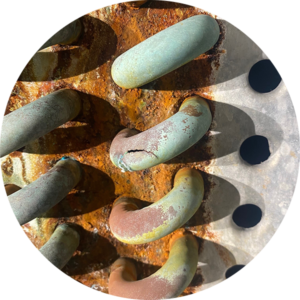
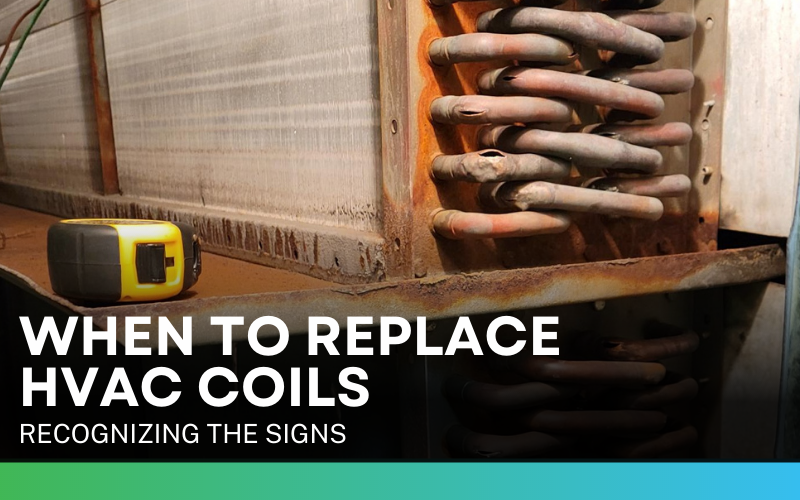
Corrosion is another indicator that your coils may need to be replaced or repaired. If you notice any signs of corrosion, it’s important to address the issue as soon as possible. Corroded coils can cause significant problems if left unchecked, including reduced efficiency, system damage and potentially even health and safety risks.

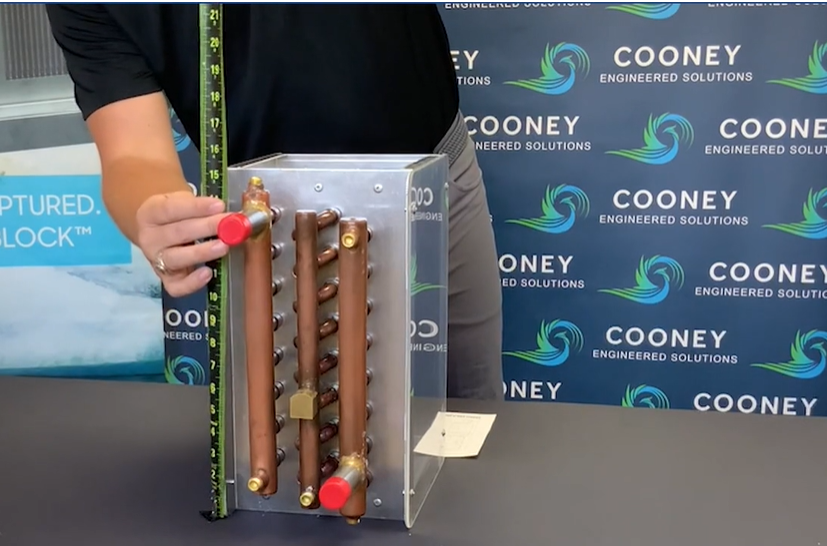
If you notice any physical damage, including cracks, leaks, bulged or split return bends, these are strong indicators that the coil should be replaced. Freeze damage is one of the most common reasons for premature coil failure, it occurs when water turns into ice, increasing its volume and creating pressure on the coil. This pressure is strong enough to rupture the coil, resulting in a bulged and split return bend or fin pack. By adding Freeze Block technology to your coils when replacing, you can reduce the risk of freeze damage and avoid costly repairs or replacements. It is important to check your HVAC system on a regular PM schedule for any signs of visible damage or corrosion in order to avoid costly repair fees later on.

Poor Airflow

If you notice a decrease in airflow or an overall decrease in circulation, this could be a result of clogged fins on the coil. This can lead to uneven temperatures within the building, as well as an uncomfortable environment due to inadequate air movement.Dirty Mold HVAC Coil
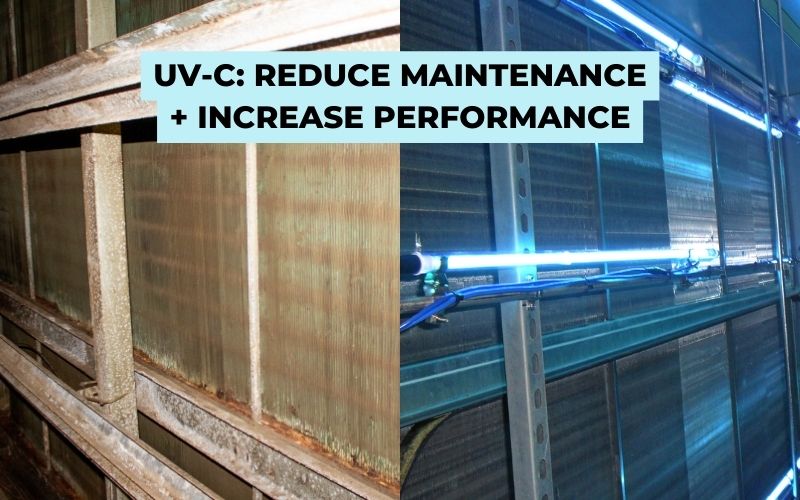
Properly cleaning coils is essential for maintaining their efficiency and prolonging their lifespan. Additionally, the use of UV systems can help reduce microorganism growth that can lead to increased dirt and dust buildup on the coil surface, negatively impacting air quality within your facility. By installing a UV system along with regular maintenance on your coils, you will be able to improve the overall airflow and reduce the need for frequent coil repairs or replacements. This in turn will help you save on energy costs, maintain comfortable temperatures and ensure that your equipment is running at optimal levels.

Age of Existing Coils

If your coils are older than 10 years, it’s time to consider replacing them. Efficiency can drop by 30% over time. This is because, as time passes your HVAC coils will naturally weaken due to constant expansion and contraction. This can lead to a decrease in the coil’s performance and an overall reduction in system efficiency.

At Cooney Coil & Energy, we strive to provide reliable and cost-effective solutions for all your HVAC needs. Our team of professionals can help you evaluate your system and identify any potential issues with the coils. We offer free site visits as well as detailed diagnostics of your existing coils in order to determine if replacement is necessary.

We can provide you with the best options for replacing your heating or cooling coils and we take pride in delivering high-quality, energy-efficient products. Our experienced team is here to help you every step of the way so that you can have peace of mind knowing that you are getting the most out of your HVAC system. Contact us today for more information about our services.

Trust Cooney Coil & Energy for Your HVAC Coil Needs

Maintaining your HVAC coils is an important part of keeping your system running optimally. Signs such as visible damage or corrosion, poor airflow, and age can help you determine when it’s time to replace your existing commercial hvac coils. Regular maintenance and the use of UV systems can help reduce dirt and dust buildup, and Freeze Block coils can prevent freeze damage. At Cooney Coil & Energy, our experienced professionals are here to provide you with reliable solutions for all your HVAC needs. Contact us today for more information!
Reduce HVAC Coil Cleaning and Increase System Performance with UVGI

Reduce HVAC Coil Cleaning and Increase System Performance with UVGI

With UV-C Disinfection, you’ll be able to breathe easily knowing that your coils are clean and free of harmful germs. You’ll also save money on maintenance costs and won’t have to worry about a dirty coil causing problems with your HVAC system or energy costs.

Dirty Coils = Higher Maintenance & Energy Costs

HVAC coils, like all parts of a system, need to be clean for optimal performance. As the coils become dirtier with dust, pollen, mold spores, mildew, and other particles – the ability for the coil to transfer heat decreases. The decrease in efficiency can cost you more in energy and money, because the system has to work harder to reach desired temperatures.

When coils are left uncleaned, the dust and other contaminants that accumulate on them can form into a thick layer of grime. This reduces efficiency, increases energy costs, and causes breakdowns more frequently.

Commercial HVAC coils become dirty very quickly due to the high volume of air that passes through them. Dust and debris can settle on the coils, reducing their efficiency, leading to higher energy costs. Over time, airborne germs such as mold and bacteria can build up on the coils, further reducing performance and potentially causing health issues for building occupants.

Regular coil cleaning is necessary to maintain optimal performance and energy efficiency but can be expensive and time-consuming.

Why Clean HVAC Coils are Key

1. Helps the System to Run More Efficiently

One of the primary reasons why it’s important to clean the coils in your commercial HVAC system is that it helps the system to run more efficiently. When coils are clogged with dirt and debris, they have to work harder to transfer heat, which can lead to increased energy consumption and higher utility bills. Regular cleaning will help to ensure that your system is running as efficiently as possible.

2. Helps to Prolong the Life of the System

Another reason why cleaning coils is important is that it helps to prolong the life of the system. When coils can begin to corrode, which can shorten the lifespan of your HVAC system. By keeping them clean, you can help to ensure that your system lasts for many years.

3. Reduces Repair and Maintenance Costs

In addition to helping your HVAC system run more efficiently and last longer, regular coil cleaning can also help to reduce repair and maintenance costs. When coils are clogged, they are more likely to break down, which can lead to expensive repairs. By keeping them clean, you can avoid these costly repairs.

4. Improves Indoor Air Quality

Another benefit of clean coils is that it improves indoor air quality. When coils collect dirt and debris, they can release these particles into the air, which can cause respiratory problems for people who are exposed to them. Regular cleaning will help to remove these particles from the air and improve the quality of the air inside your building.

5. Reduces Allergens in the Air

In addition to improving indoor air quality, regular coil cleaning can also help to reduce allergens in the air. Coil cleaning removes pollen, dust mites, and other allergens from the coils, which helps to improve air quality for people who suffer from allergies or asthma

Traditional Coil Cleaning Methods

Traditional coil cleaning involves the use of harsh chemicals and abrasive methods to remove dust, debris, and microorganisms from commercial HVAC coils. This can be a time-consuming process that must be done frequently in order to maintain optimal performance and energy efficiency. Unfortunately, due to reduced manpower caused by budget cuts or staff shortages, this regular maintenance may not be done as often as necessary, leading to decreased performance and increased energy costs.

UV-C Disinfection – The Easier, More Efficient Solution for HVAC Coils

Visually inspecting your coils may not be enough to detect when they need cleaning. That’s why UVGI disinfection is helping facilities keep their coils clean and running optimally.


UV-C light is a type of ultraviolet light that has been scientifically proven to kill germs, bacteria, and other microorganisms on contact. It can be used in an HVAC system to reduce the spread of airborne germs, and keep the coils running clean and efficiently.

Benefits of UV-C

    1. Keeps your coils clean and running optimally
    2. Improves coil performance
    3. Dramatically reduces the need for frequent coil cleaning
    4. Reduces the spread of airborne germs

UV-C disinfection is an effective way to keep commercial HVAC coils clean and free of germs without the need for frequent coil cleanings. UV-C light is able to penetrate the coil surface and kill mold, bacteria and other germs without the need for harsh chemicals or abrasive cleaning methods. This allows coils to maintain optimal performance while saving time and mo


ney on maintenance costs. It also greatly reduces the spread of airborne germs, keeping occupants safe and healthy in their buildings.

Depending on what your facility’s goal is – coil cleaning, air disinfection, or reducing HAI’s Cooney Coil & Energy can help. Our team is trained to properly measure and design an effective UV-C system for your HVAC system and goals. Our commercial Fresh Aire-UV products are robust, American made and backed by a lifetime warranty on all parts (expect bulbs).

Frequently Asked Questions

Does UV Cleaning Really Work?

Yes, ultraviolet (UV) cleaning is a proven technology for disinfecting commercial HVAC systems. UV cleaning uses intense light from an ultraviolet lamp to destroy bacteria, mold and other contaminants that can build up in air ducts.

How Does UV Disinfection Work?

UV disinfection works by exposing contaminants in an HVAC system to intense light from a UV lamp. The ultraviolet light breaks down the structure of the bacteria, viruses and other microorganisms, killing them on contact. This helps reduce the spread of airborne germs and ensures that coils in an HVAC system remain free of contaminants and running optimally.

Does UV-C Kill Mold on Coils?

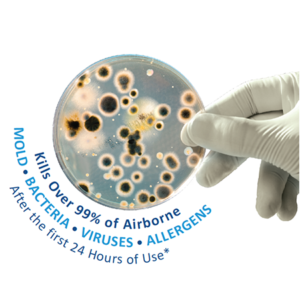
Yes, UV-C light is very effective at killing mold as long as a system is measured and designed properly. UV-C light is able to penetrate the coil surface and kill mold spores such as aspergillus niger (black mold) that may be present on the surface, helping to keep HVAC coils clean and free of contaminants.

When using a Fresh Aire UV-C bulb, the germ-killing effect starts almost immediately – with about 90% of surface microbes being sterilized within the first few minutes. After the first 24 hours, this number increases to about 99.99%.

UV-C Lights for HVAC

How does UV-C compare to bipolar ionization?

Ultraviolet C (UV-C) is an established air disinfection technology that can be used to inactivate viruses, such as SARS-2-CoV, the virus that causes COVID-19. When compared to bipolar ionization, UV-C has been studied for more than a century and there are some significant differences between the two technologies.

The primary difference between UV-C and bipolar ionization is how each technology works. Bipolar Ionization uses electrical charges to create ions that attach to tiny particles in the air and either kill them or make them heavier so they’ll settle out on surfaces. On the other hand, UV-C light breaks down DNA strands of viruses and other microorganisms, rendering them inactive.

In simple terms, bipolar ionization acts like a trap, while UV-C actively kills microorganisms and contaminants.

How often do UV-C bulbs need to be replaced?

Although lamps may still emit visible light even after their designated 1 or 2-year lifespan, their UV effectiveness will decrease over time. This is why it is important to replace your amplifier after its designated lifetime – as the lamp’s UV output will no longer be as effective at killing germs and viruses in the environment.

Get a Quote

UV Light for Health and HVAC System Performance

UV Light for Health and HVAC System Performance

Indoor air quality has become a hot topic in the HVAC industry. Imagine your facility is a living breathing organism. The HVAC system would be the lungs or respiratory system of the building.

Over time as buildings became more contained and tighter to conserve energy, the causes of asthma and allergy-related illness have been on the rise. The use of more recirculated air within these small spaces has posed an issue.

We’re trapped inside with biologicals and contaminants. Let’s find a way to treat them.

The History of UV Lights

UVGI has been around forever! …Well, a very long time. UVGI has been used in the food industry, water purification, and even used to disinfect hospital operating rooms in the 1930s. In the 1990s the HVAC industry began to see the benefit of UV lights. There have been many studies on the use of UV light for disinfection ASHRAE, the CDC, and WHO all recognize the effectiveness of UV lights.

Benefits of UV Light in the HVAC System

Cleaner Coils = Lower Costs + Increased Performance

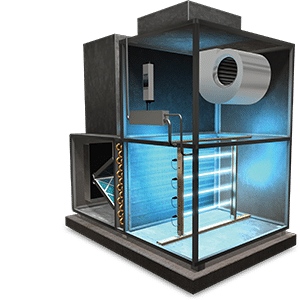
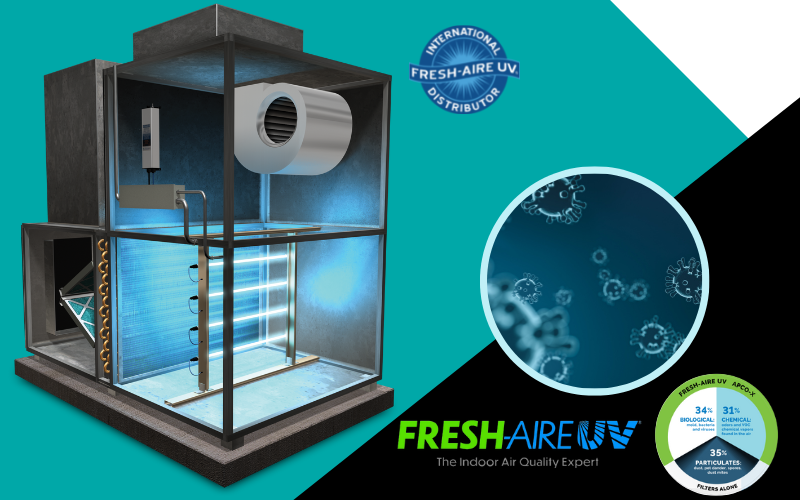
Ultraviolet germicidal irradiation (UVGI) is an effective tool for improving the performance of air handler coils. This technology eliminates the build-up of biofilm on coil fins, which can reduce efficiency and increase airflow. It also helps to prevent microbial growth on surfaces like drain pans, walls, floors and blower shrouds. Installing a UVGI system in an HVAC system will reduce costs associated with pressure/chemical washing and provide continual protection against biological contamination 24 hours a day. Implementing this technology can lead to significant cost savings while ensuring peak performance of the equipment.

Improving Indoor Air Quality for Healthy Buildings

UV light is an essential part of maintaining healthy air quality in commercial facilities and can help keep occupants safe from harmful contaminants. Strategically placed UV Light systems will help mitigate the levels of contaminants in your AHU system and therefore the levels in your building’s airstream.

UV lights can reach every inch of the space and eliminate bacteria, mold, and viruses such as SARS-CoV-2. UVGI offers a chemical-free method to control biologicals that is safe and effective.

Summary

It’s clear that UVC technology is here to stay! If you’re looking for a way to reduce energy costs, improve air quality, and protect occupant health in your facility, UV Light is the solution.

Some considerations when installing UV lights are:

• The size of the HVAC system and ductwork

• The wattage of the bulbs that will be used

• Where they should be placed (near coils or inside ducts)

• Maintenance requirements like bulb replacement and cleaning intervals

It’s important to consult with an HVAC expert who has experience with UV light installation so you can determine the best positioning for optimal results. With proper care and maintenance, UV lights can last for many years and provide effective protection against airborne microbes, dust mites, mold spores and other allergens, as well as reducing energy costs.

If you’re concerned about indoor air quality in your facility, UV light is an effective, cost-effective solution that can help improve health and system performance over time. Contact our experts today at [email protected] or give us a call at (610) 783-1136!

How to Measure Commerical or Industrial HVAC Coils

How to Measure Commerical or Industrial HVAC Coils

Are you looking to replace an HVAC coil but don’t know how to get the right measurements? Look no further! In this blog post, we’ll be discussing the basics of measuring an HVAC coil so you can order a replacement with confidence. Here’s what we’ll cover:

By the end of this blog post, you should have all the information and tips you need to order a new HVAC coil with confidence. So let’s get started!


What Type of HVAC Coil are you measuring?

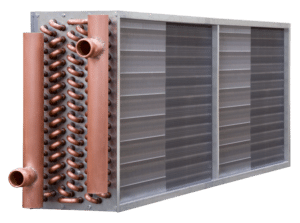
Knowing which type of coil you are measuring is essential to selecting the correct replacement to order. In general, there are 5 types of commercial HVAC coils that you should be aware of.

Fluid Coils

Supply connections are normally at the bottom of the coil, return bends are visible and the coil normally has vent and drain connections.

Standard Steam Coils

Coils have supply and return headers. The supply connection is normally located in the middle of the supply header and the condensate drain is located at the low point of the coil for complete drain-ability. Rows are limited to 4 and are connected by return bends. coils can be the same or opposite end connection construction.

Steam Distributing Coils

Supply connections are normally in the middle of the header with no return bends. Rows are limited to 2 rows with 5/8” construction

Direct Expansion (DX) Coils

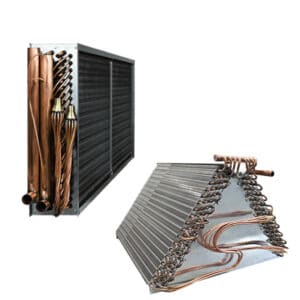
Coils normally have distributor leads (spaghetti tubes) and expansion valves. These coils can have multiple distributor arrangements

Condenser Coils

The supply connection normally enters at the top of the coil. These coils look similar to a water coil, except for the location of the supply connection. Sub-cooler circuits typically have separate headers and represent a small portion of the coil’s surface.

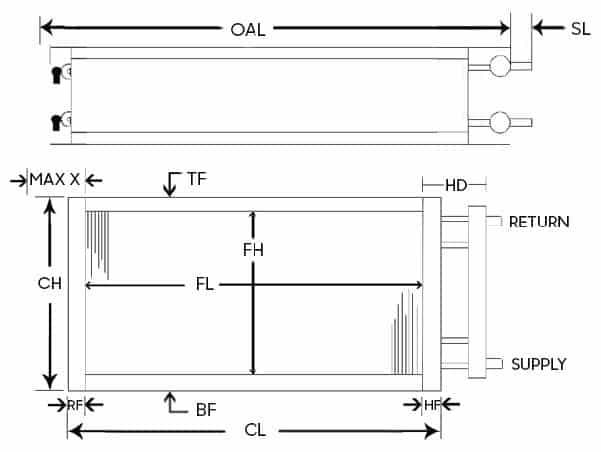
Determine finned height (FH) and finned length (FL)

Finned height is always measured in the direction of the fin. Finned length is always measured in the direction of the tubes, regardless of which direction the tubes are running.


Determine casing height (CH)

Casing height is always measured in the same direction as finned height (FH). It includes the casing/sideplate flanges (B) on the top and bottom of the coil. In some instances, the flanges may be flat at the top and bottom, so you are only measuring finned height plus the metal thickness.

Determine casing length (CL)

Casing length is always measured in the same direction as fin length (FL). It includes the tube sheet flanges (A) on the ends of the coil. Some coils may actually have baffles covering the headers and should be included in your casing length measurement.

Determine the number of rows

Rows are always counted in the direction of airflow, regardless of how the coil is mounted. Count rows either by viewing the header end or the return bend end of the coil. When viewing either end, remember that the return bends or headers may run unevenly across the coil.

Determine fins per inch (FPI)

Fins Per Inch (FPI)

Fins Per Inch (FPI)

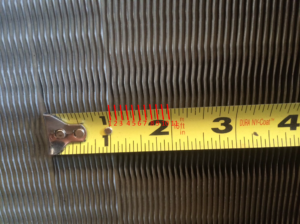
Fins per inch is pretty self-explanatory, we want to count how many fins are within one inch. Using a ruler or tape measure, count the number of fins on the coil within one inch. Normal fin counts will be between 4 and 14 FPI.


Determine casing depth (CD)

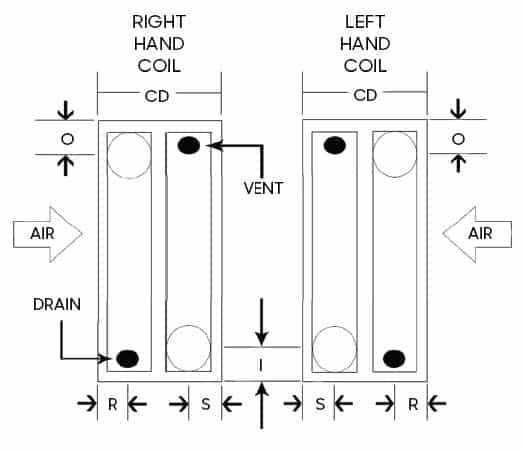
Casing depth is always measured in the direction of air flow. Casing depth will normally be 4” to 6” for hot water and steam coils, and 6” to 15” for chilled water and direct expansion coils.

Determine overall coil length, including headers (OAL)

Overall length is one of the most important dimensions to be obtained because most coils only have connection stubs extending outside the walls of the unit. Overall length is measured from the outside edge of the header end – not including connections/stubs

(S) – to the outside edge of the return bend end, plus any baffles extending beyond the header or return bends.

Determine overall coil length, including connection.

Add the length of the connection stub (S) to the overall length (OAL) determined in step 5. This measurement is important for two reasons: 1) because some manufacturers include connections within the casing length of the unit: and 2) because piping cannot be moved.

Determine connection size and type

Note your connection type for replacement or new connection needed for system repiping.

If necessary, remove insulation to see the incoming and outgoing lines. Measure the diameter of the outside of the line to help determine connection size.

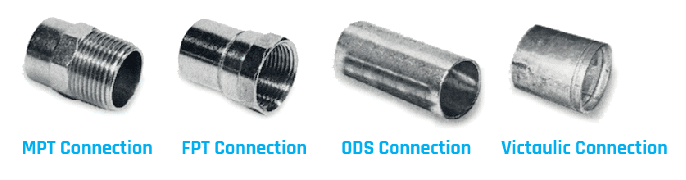
Standard connection types are MPT (male pipe thread), FPT (female pipe thread), ODS (sweat connection,) and Victaulic. MPT is threaded on the outside, FPT is threaded on the inside, ODS connections have no threads, and Victaulic connections have a groove around the outside.

Determine air flow

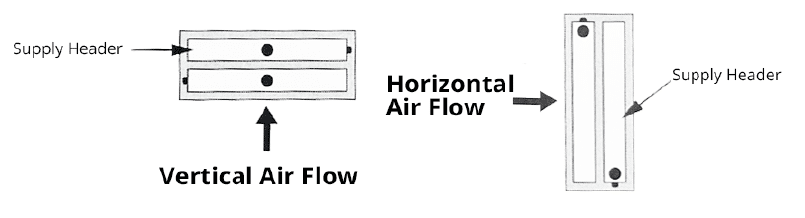
Air flow is described by the direction in which air is flowing through the coil. Horizontal air flow is air running through the coil from wall to wall in the room. Floor-to-ceiling is vertical air flow. If the coil is mounted vertically (i.e. on the wall) air flow is horizontal. If the coil is mounted horizontally (i.e. on the floor or ceiling) the air flow is vertical.

Determine the number of tubes per row

Count the number of tubes that are in the row. The number of tubes is important when ordering an exact replacement.

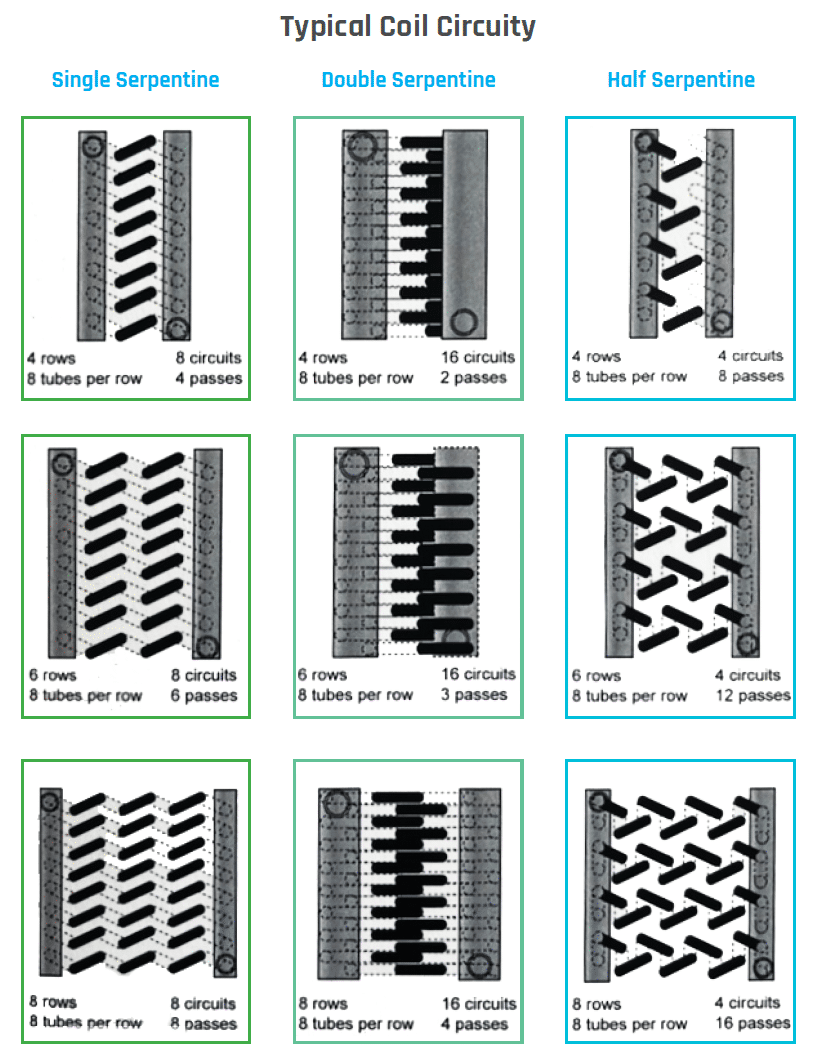
Determine the coil circuitry

Coil circuitry is determined by the number of tubes going into the header divided by the number of tubes in the first row. See the diagram below for reference.

Tips & Tricks

  • The more information the better! If you use a measuring template, you’re less likely to miss something
  • Videos and pictures in addition to a measuring template are very helpful. Put your phone camera on .5 lens to take a video or picture in a tight space.
  • Circuiting is important! Tubes in the header AND tubes in the face.
  • Get horizontal and vertical centers of pipe connections, max AHU L, H, and D inside of unit.
  • Silly putty can be a useful tool to help get FPI measurements in dark spaces. Roll out the putty and take an imprint of the fins so you can easily measure outside of the AHU. Gum can also work in a pinch, but we don’t recommend chewing it after measuring!
  • Measure Twice.


Simple Steps to Preparing Your Commercial HVAC System for Cooling Season

Simple Steps to Preparing Your Commercial HVAC System for Cooling Season

Simple Steps to Prep Your Commercial HVAC System for Cooling Season

A well-maintained HVAC system can provide reliable cooling during the cooling season, helping to reduce energy bills and improve air quality for occupants. Proper maintenance includes regular filter changes, cleaning of cooling coils and drain pans, sealing of ducts, and regular inspection by an HVAC professional. Additionally, it is important to keep the system free from dust and other debris. Following these steps can help ensure a comfortable cooling season for all.

What is Cooling Season?

Cooling season in HVAC refers to the time of year when air conditioning is necessary for comfort and health. In many parts of the world, this generally lasts from May through September, although regional climates may cause it to begin or end earlier or later. During cooling season, an HVAC system circulates cool air throughout the home, office, or other building to keep the indoor environment comfortable. The temperatures used vary by region and comfort level.

Keys for Comfortable and Efficient Cooling

Replacing your HVAC coils is essential before cooling season because worn-out or damaged coils can lead to higher energy bills, poor indoor air quality, and inadequate cooling performance.

Check Coils for Leaks prior to Startup

Freeze Damaged HVAC Coil with Split Return Bends

Although not typically used during winter, some cooling coils may have split tubes and freeze damage due to exposure to freezing temps over winter. It’s important to check all coils for leaks several months before cooling season. This allows time to order and install the coils before they are needed to cool a building. Newer models of coils are more efficient than ever before, so replacing them can help you save money on your energy bills.

Cleaning Coils and Drain Pans before Cooling Season

Cleaning your HVAC coils and drain pans is essential for proper functioning during cooling season. Dirty coils can cause the system to work harder, which leads to higher energy costs and reduced cooling performance. Cleaning the coils also helps reduce the amount of dust, dirt, and other debris that can accumulate in the system over time. It’s important to clear out any debris that might be obscuring the coils, as this can prevent them from transferring heat effectively.

In addition to cleaning the coils, it’s also important to clean the drain pans and lines. If there is a buildup of dirt or other debris in these areas, it can impede the flow of water and lead to water damage. Regularly cleaning these areas can help ensure that your HVAC system is functioning optimally during cooling season.

Types of Cooling HVAC Coils

Chilled Water Coils

Known as hydronic cooling coils, chilled water coils are a type of heat exchanger used to reduce temperatures and humidity from air streams. Air passes through the fins while either water or an ethylene/propylene glycol solution circulates in the tubes for superior cooling capabilities. The flow of water and air generally move in opposite directions which maximizes heat transfer; this arrangement is known as counter-flow heat exchanger technology.

Direct Expansion (DX) Coils / Evaporator Coils

DX (Direct Expansion) coils, also called evaporator coils, are one of the most common types of coils used for cooling in HVAC systems.  Evaporator coils remove heat and moisture from the air, cooling it in the process. The coils contain refrigerant that absorbs heat from the air as it passes across them, lowering its temperature.

Evaporator coils are available in an assortment of sizes, designs and capacities depending on the type of installation required, cooling capacity needed, and manufacturer. To increase the coil’s performance without changing length or width while keeping additional rows in place; more copper/aluminum tubing is added bringing you even closer to your optimal result!

Condenser Coils

A condenser coil is an important part of any cooling system. It takes heat away from the refrigerant and helps it turn back into a liquid. As air passes over the top of the coil, heat is taken away. A separate part of the coil helps make sure that the refrigerant changes back from gas to liquid. This all helps the cooling system run smoothly.

Replacement Coils from Cooney Coil & Energy

At Cooney Coil & Energy, we offer a variety of replacement coils and related components for all types of HVAC systems. Our replacement cooling coils are engineered to provide high-efficiency performance that exceeds industry standards. We guarantee form fit and function for our products, so you can be sure you’re getting the best possible product for your needs. Plus, our expedite program can get your building ready for the cooling season in as little as a week. With our superior quality and fast turnaround times, you can rest assured that your replacement coils will be installed quickly and efficiently. Contact us today to learn more about our products and services!

Schedule a Site Visit

If you’d like to learn more about how Cooney Coil & Energy can help you optimize your HVAC system, schedule a site visit today. Our experts can evaluate the condition of your equipment and recommend solutions for improving its performance. Contact us to get started!