Cooney Coil & Energy logo
How to Measure Commerical or Industrial HVAC Coils

How to Measure Commerical or Industrial HVAC Coils

Are you looking to replace an HVAC coil but don’t know how to get the right measurements? Look no further! In this blog post, we’ll be discussing the basics of measuring an HVAC coil so you can order a replacement with confidence. Here’s what we’ll cover:

By the end of this blog post, you should have all the information and tips you need to order a new HVAC coil with confidence. So let’s get started!


What Type of HVAC Coil are you measuring?

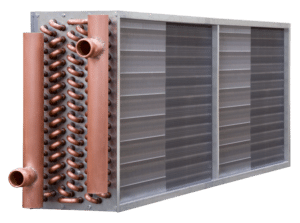
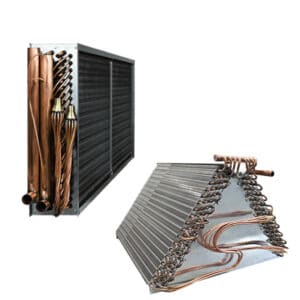
Knowing which type of coil you are measuring is essential to selecting the correct replacement to order. In general, there are 5 types of commercial HVAC coils that you should be aware of.

Fluid Coils

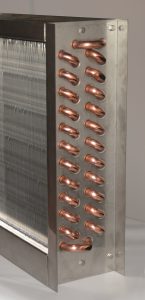
Supply connections are normally at the bottom of the coil, return bends are visible and the coil normally has vent and drain connections.

Standard Steam Coils

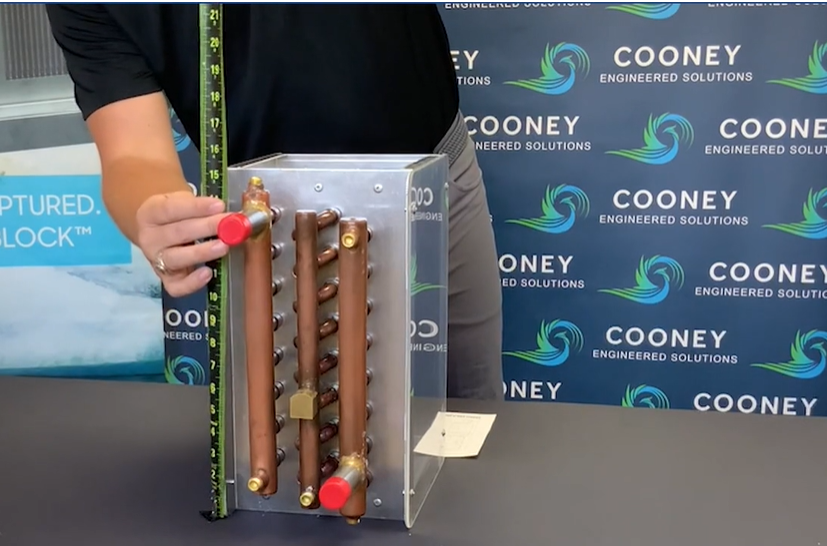
Coils have supply and return headers. The supply connection is normally located in the middle of the supply header and the condensate drain is located at the low point of the coil for complete drain-ability. Rows are limited to 4 and are connected by return bends. coils can be the same or opposite end connection construction.

Steam Distributing Coils

Supply connections are normally in the middle of the header with no return bends. Rows are limited to 2 rows with 5/8” construction

Direct Expansion (DX) Coils

Coils normally have distributor leads (spaghetti tubes) and expansion valves. These coils can have multiple distributor arrangements

Condenser Coils

The supply connection normally enters at the top of the coil. These coils look similar to a water coil, except for the location of the supply connection. Sub-cooler circuits typically have separate headers and represent a small portion of the coil’s surface.
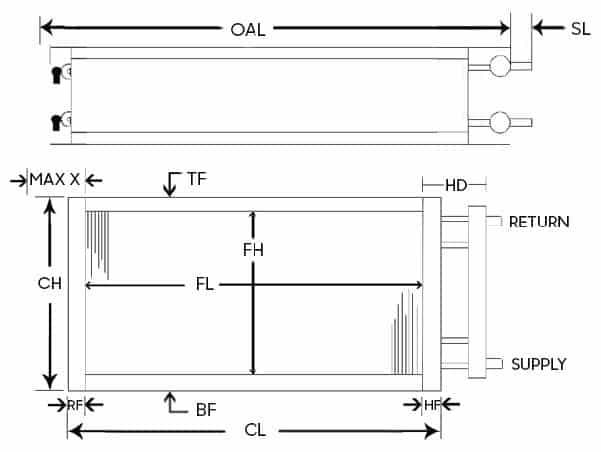
Determine finned height (FH) and finned length (FL)

Finned height is always measured in the direction of the fin. Finned length is always measured in the direction of the tubes, regardless of which direction the tubes are running.


Determine casing height (CH)

Casing height is always measured in the same direction as finned height (FH). It includes the casing/sideplate flanges (B) on the top and bottom of the coil. In some instances, the flanges may be flat at the top and bottom, so you are only measuring finned height plus the metal thickness.

Determine casing length (CL)

Casing length is always measured in the same direction as fin length (FL). It includes the tube sheet flanges (A) on the ends of the coil. Some coils may actually have baffles covering the headers and should be included in your casing length measurement.

Determine the number of rows

Rows are always counted in the direction of airflow, regardless of how the coil is mounted. Count rows either by viewing the header end or the return bend end of the coil. When viewing either end, remember that the return bends or headers may run unevenly across the coil.

Determine fins per inch (FPI)
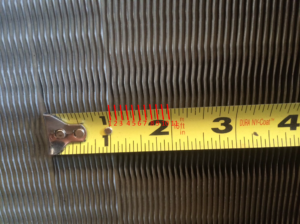
Fins Per Inch (FPI)

Fins Per Inch (FPI)

Fins per inch is pretty self-explanatory, we want to count how many fins are within one inch. Using a ruler or tape measure, count the number of fins on the coil within one inch. Normal fin counts will be between 4 and 14 FPI.


Determine casing depth (CD)
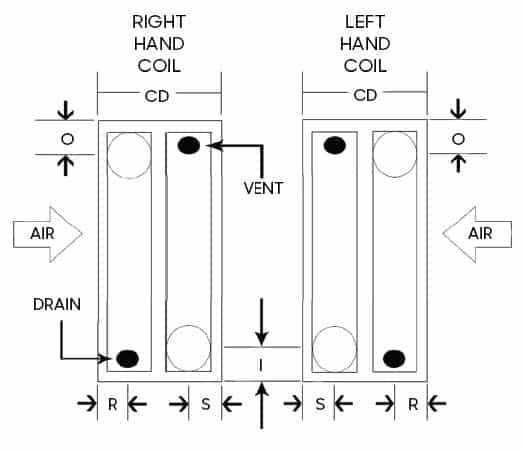
Casing depth is always measured in the direction of air flow. Casing depth will normally be 4” to 6” for hot water and steam coils, and 6” to 15” for chilled water and direct expansion coils.

Determine overall coil length, including headers (OAL)

Overall length is one of the most important dimensions to be obtained because most coils only have connection stubs extending outside the walls of the unit. Overall length is measured from the outside edge of the header end – not including connections/stubs

(S) – to the outside edge of the return bend end, plus any baffles extending beyond the header or return bends.

Determine overall coil length, including connection.

Add the length of the connection stub (S) to the overall length (OAL) determined in step 5. This measurement is important for two reasons: 1) because some manufacturers include connections within the casing length of the unit: and 2) because piping cannot be moved.

Determine connection size and type
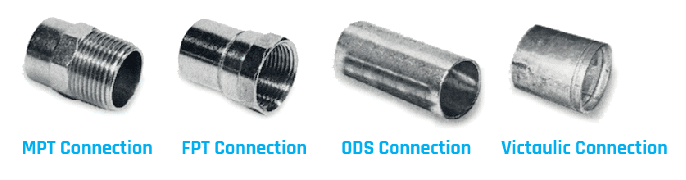
Note your connection type for replacement or new connection needed for system repiping.

If necessary, remove insulation to see the incoming and outgoing lines. Measure the diameter of the outside of the line to help determine connection size.

Standard connection types are MPT (male pipe thread), FPT (female pipe thread), ODS (sweat connection,) and Victaulic. MPT is threaded on the outside, FPT is threaded on the inside, ODS connections have no threads, and Victaulic connections have a groove around the outside.

Determine air flow
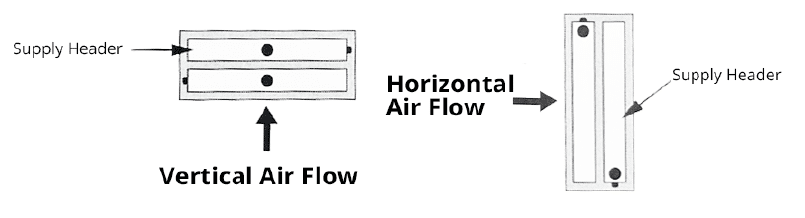
Air flow is described by the direction in which air is flowing through the coil. Horizontal air flow is air running through the coil from wall to wall in the room. Floor-to-ceiling is vertical air flow. If the coil is mounted vertically (i.e. on the wall) air flow is horizontal. If the coil is mounted horizontally (i.e. on the floor or ceiling) the air flow is vertical.

Determine the number of tubes per row

Count the number of tubes that are in the row. The number of tubes is important when ordering an exact replacement.

Determine the coil circuitry

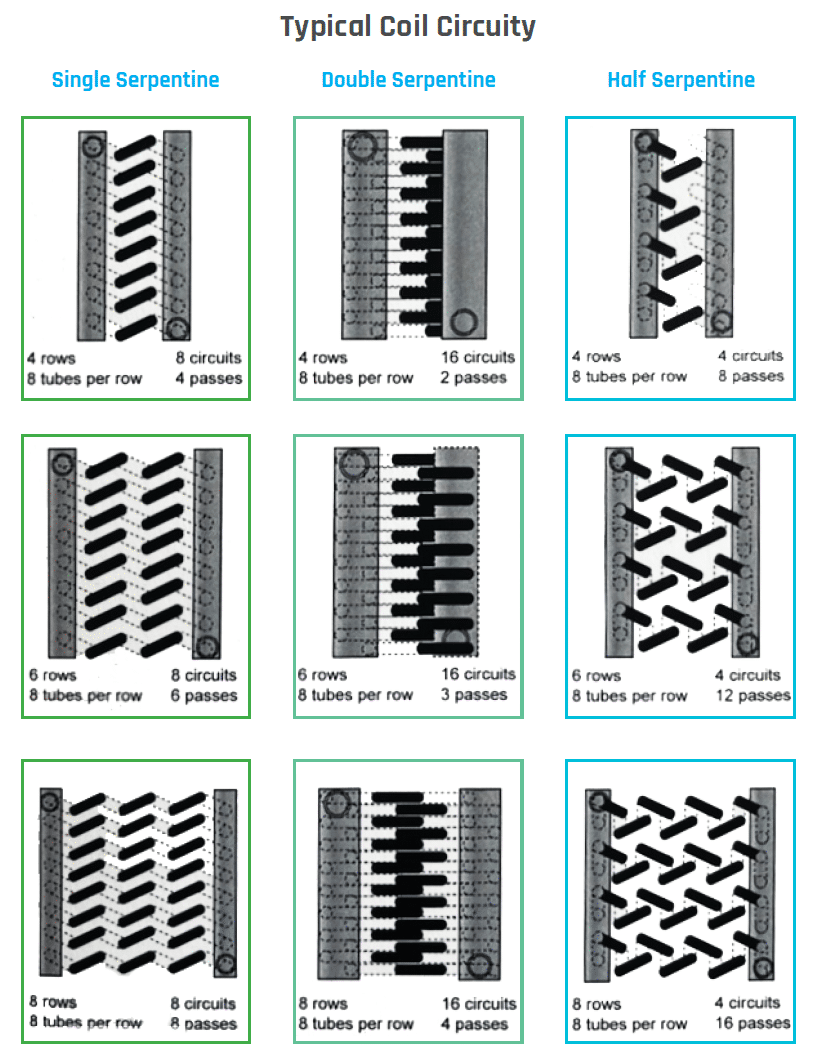
Coil circuitry is determined by the number of tubes going into the header divided by the number of tubes in the first row. See the diagram below for reference.
Tips & Tricks

  • The more information the better! If you use a measuring template, you’re less likely to miss something
  • Videos and pictures in addition to a measuring template are very helpful. Put your phone camera on .5 lens to take a video or picture in a tight space.
  • Circuiting is important! Tubes in the header AND tubes in the face.
  • Get horizontal and vertical centers of pipe connections, max AHU L, H, and D inside of unit.
  • Silly putty can be a useful tool to help get FPI measurements in dark spaces. Roll out the putty and take an imprint of the fins so you can easily measure outside of the AHU. Gum can also work in a pinch, but we don’t recommend chewing it after measuring!
  • Measure Twice.


Simple Steps to Preparing Your Commercial HVAC System for Cooling Season

Simple Steps to Preparing Your Commercial HVAC System for Cooling Season

Simple Steps to Prep Your Commercial HVAC System for Cooling Season

A well-maintained HVAC system can provide reliable cooling during the cooling season, helping to reduce energy bills and improve air quality for occupants. Proper maintenance includes regular filter changes, cleaning of cooling coils and drain pans, sealing of ducts, and regular inspection by an HVAC professional. Additionally, it is important to keep the system free from dust and other debris. Following these steps can help ensure a comfortable cooling season for all.

What is Cooling Season?

Cooling season in HVAC refers to the time of year when air conditioning is necessary for comfort and health. In many parts of the world, this generally lasts from May through September, although regional climates may cause it to begin or end earlier or later. During cooling season, an HVAC system circulates cool air throughout the home, office, or other building to keep the indoor environment comfortable. The temperatures used vary by region and comfort level.

Keys for Comfortable and Efficient Cooling

Replacing your HVAC coils is essential before cooling season because worn-out or damaged coils can lead to higher energy bills, poor indoor air quality, and inadequate cooling performance.

Check Coils for Leaks prior to Startup

Freeze Damaged HVAC Coil with Split Return Bends

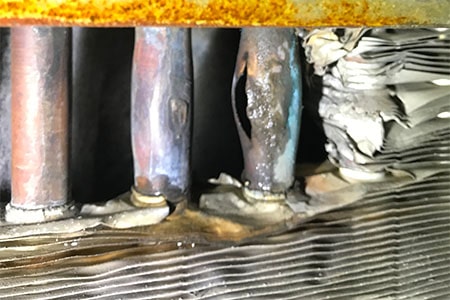
Although not typically used during winter, some cooling coils may have split tubes and freeze damage due to exposure to freezing temps over winter. It’s important to check all coils for leaks several months before cooling season. This allows time to order and install the coils before they are needed to cool a building. Newer models of coils are more efficient than ever before, so replacing them can help you save money on your energy bills.

Cleaning Coils and Drain Pans before Cooling Season

Cleaning your HVAC coils and drain pans is essential for proper functioning during cooling season. Dirty coils can cause the system to work harder, which leads to higher energy costs and reduced cooling performance. Cleaning the coils also helps reduce the amount of dust, dirt, and other debris that can accumulate in the system over time. It’s important to clear out any debris that might be obscuring the coils, as this can prevent them from transferring heat effectively.

In addition to cleaning the coils, it’s also important to clean the drain pans and lines. If there is a buildup of dirt or other debris in these areas, it can impede the flow of water and lead to water damage. Regularly cleaning these areas can help ensure that your HVAC system is functioning optimally during cooling season.

Types of Cooling HVAC Coils

Chilled Water Coils

Known as hydronic cooling coils, chilled water coils are a type of heat exchanger used to reduce temperatures and humidity from air streams. Air passes through the fins while either water or an ethylene/propylene glycol solution circulates in the tubes for superior cooling capabilities. The flow of water and air generally move in opposite directions which maximizes heat transfer; this arrangement is known as counter-flow heat exchanger technology.

Direct Expansion (DX) Coils / Evaporator Coils

DX (Direct Expansion) coils, also called evaporator coils, are one of the most common types of coils used for cooling in HVAC systems.  Evaporator coils remove heat and moisture from the air, cooling it in the process. The coils contain refrigerant that absorbs heat from the air as it passes across them, lowering its temperature.

Evaporator coils are available in an assortment of sizes, designs and capacities depending on the type of installation required, cooling capacity needed, and manufacturer. To increase the coil’s performance without changing length or width while keeping additional rows in place; more copper/aluminum tubing is added bringing you even closer to your optimal result!

Condenser Coils

A condenser coil is an important part of any cooling system. It takes heat away from the refrigerant and helps it turn back into a liquid. As air passes over the top of the coil, heat is taken away. A separate part of the coil helps make sure that the refrigerant changes back from gas to liquid. This all helps the cooling system run smoothly.

Replacement Coils from Cooney Coil & Energy

At Cooney Coil & Energy, we offer a variety of replacement coils and related components for all types of HVAC systems. Our replacement cooling coils are engineered to provide high-efficiency performance that exceeds industry standards. We guarantee form fit and function for our products, so you can be sure you’re getting the best possible product for your needs. Plus, our expedite program can get your building ready for the cooling season in as little as a week. With our superior quality and fast turnaround times, you can rest assured that your replacement coils will be installed quickly and efficiently. Contact us today to learn more about our products and services!

Schedule a Site Visit

If you’d like to learn more about how Cooney Coil & Energy can help you optimize your HVAC system, schedule a site visit today. Our experts can evaluate the condition of your equipment and recommend solutions for improving its performance. Contact us to get started!

Cooney Coil & Energy Now Offering Microchannel Replacement Coils!

Cooney Coil & Energy Now Offering Microchannel Replacement Coils!

We’re happy to announce our Cooney Coil & Energy division now an Evapco Alcoil distributor of MicroChannel coils!

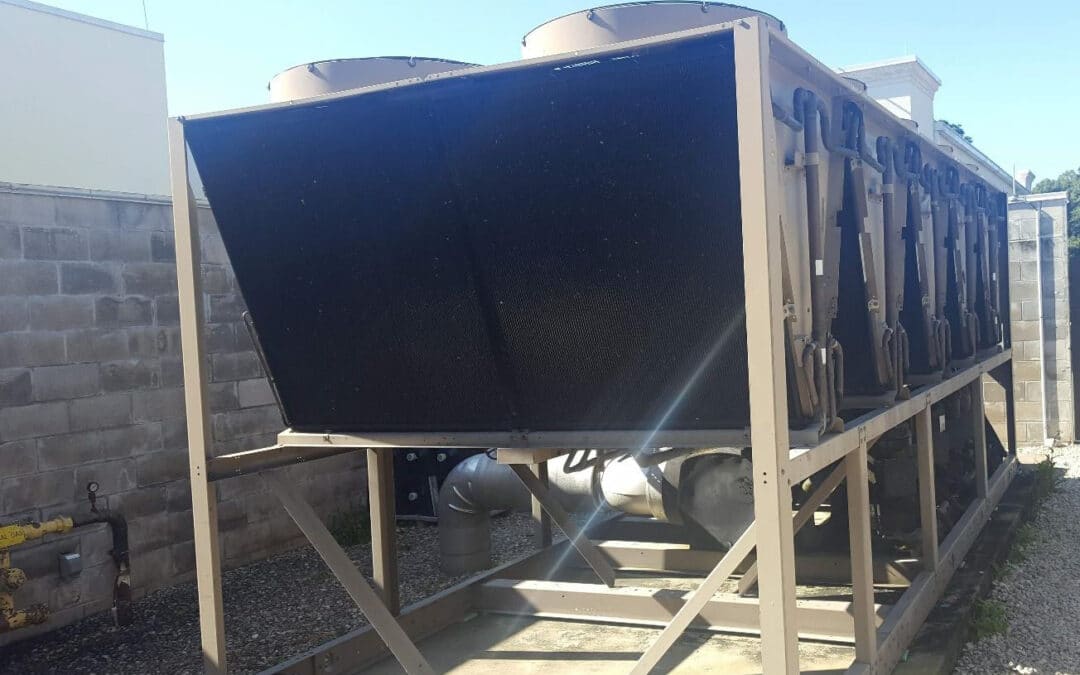
Evapco’s microchannel coils are a robust design and built to last longer than typical OEM microchannel coils. Contact us today for replacement microchannel coils in the Philadelphia area.

Stock and Custom Coils Available

Why do Coils Fail?

Coils fail for a number of reasons.

These include:

// Vibration // Corrosion

// Excessive fan cycling

// Low load cycling // Physical damage

Fin/Tube coils are naturally susceptible to galvanic copper to aluminum corrosion that significantly reduces fin performance over time, and can also sacrifice the aluminum fin material in seacoast environments. Copper elbows and tubes also can corrode, pit, and crack over time. Thus, a coil mean time to failure can range from 5-10yrs, and preferably 15-20 years or more, if robust.

Microchannel coils, manufactured by others can fail due to the same reasons listed above. In many OEM systems, these coils are automotive style and use thin tube walls, yet are susceptible to the worst of operating conditions, vibration, and sea coast effects. Microchannel coils are the future of chiller condenser coils, but must take the same abuse, wear and tear.

Why Evapco Alcoil?

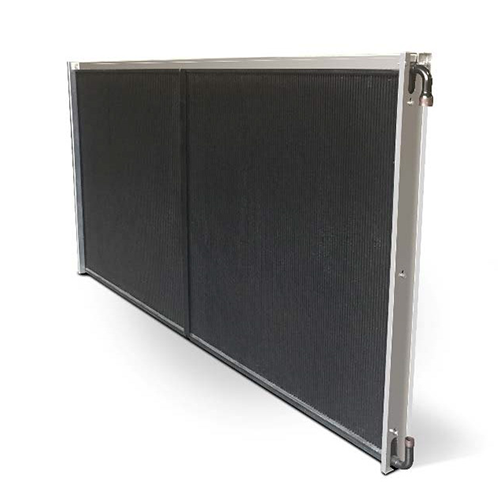
Evapco Alcoil is an all-aluminum microchannel coil, designed for high efficiency, with fins integrally brazed to the tubes, and tubes integrally brazed to the headers. Evapco Alcoil, however, is a robust industrial constructed coil with thicker tubes and thicker headers. It is the latest generation of high-performance condenser coil with vertical tubes (not horizontal) to reduce standing water on the coil, reduce thermal stresses and provide features intended for longer life operation.

How is a Evapco MicroChannel Replacement Coil Different from an OEM MicroChannel Coil?


// Non-Automotive, industrial design

// 25-30% Thicker tube walls

// Epoxy Coating for superior corrosion protection

// Lower Refrigerant Pressure drop for improved operation and oil return

// Built-in Mini-receiver (in lower header) to make it easier to charge

// Side Flange for drop in/slide in installation

// 5-Year Warranty

Contact Us Today!

Make sure your microchannel coils are ready for cooling season. Contact us for a free site visit.

How to Tell When Your HVAC System Needs to have the Coils Replaced

How to Tell When Your HVAC System Needs to have the Coils Replaced

Don’t let them fail! Here’s your HVAC coil replacement guide

The coils in an HVAC system are some of the most important parts of your air handling system, which is why a proper HVAC coil replacement is essential to keeping that system running. The HVAC coil is an essential component that your system just can’t run without. If you suffer from an HVAC coil failure and your coil springs a leak—or worse, it ruptures—you have a huge problem on your hands. Damaged coils can cause massive losses of product, degrade air quality, and lead to extensive water damage.

So don’t let your coil break, and make sure to stay as up-to-date as possible on your repairs. A good inspection and repair schedule can extend the life of your HVAC coils by many years. But the truth of the matter is that HVAC coils have a life expectancy and even with the best care eventually require replacement.

So how can you tell when you need to repair vs replace? Look for the signs listed below for a rough idea of when you should have your HVAC coils replaced.

Signs That Show Your System Needs HVAC Coil Replacement

If you take good care of your HVAC coils, they will last a long time. But eventually, everyone will need an HVAC coil replacement. Here are a few signs that you should replace HVAC coils instead of spending your money on the HVAC coil leak repair cost.

  • Is there oil residue in the condensate drain pan tray? If there is a leak in your system, the fluid or refrigerant may be leaking out, which causes a drop in performance. The refrigerant looks like a dark oil, and if you see it in the tray, then there’s probably a leak. A leaking HVAC coil should be replaced before it causes further damage.
  • Do you need to replace fluids or refrigerant often? If you feel like your system is always low on fluid or refrigerant and you find yourself replacing it often, it might mean that you have a leak. A perfect system has no leaks and should rarely need replacement. Most systems aren’t perfect, but you still shouldn’t need to add fluids or refrigerants every few weeks. If you find yourself performing maintenance more than you should have to, you may have a leak. Check for a leak or call a professional to do it for you.
  • Can you spot an actual leak? Sometimes a leak in the coil will be obvious (like a freeze-induced rupture), but sometimes it will not be. Just like a bicycle tire, you can find a leak in an HVAC coil by smearing soap on a suspicious spot and watching for tiny bubbles. If you do find a leak, don’t let the air conditioner coil replacement cost prevent you from replacing the coil before it gets out of hand.

If you find a leak in your system, call a professional. Not every leaky coil needs to be replaced: some of them can be repaired with a leak seal treatment or by brazing the hole. A professional can help you make the best decision for your air handling system and your building as a whole. Give Cooney Coil a call or get in touch today to find out how we can help.

HVAC Coil Replacements

At Cooney Coil & Energy, we know the critical role that efficient, reliable coils play in your commercial and industrial HVAC systems. Old, worn-out coils can decrease your system’s efficiency, increase energy costs, and even lead to system failure.

That’s why we’re proud to specialize in top-tier replacement HVAC coils, designed to meet all types of requirements and sizes. Our coils aren’t just replacements; they’re upgrades – built to ensure your HVAC system runs at peak efficiency for years to come.

5 Ways to Prepare for Heating Season

5 Ways to Prepare for Heating Season

The summer has come and gone, is your HVAC system ready for heating season?

Winter is coming. Get ready with our 5 quick tips to prepare your facility.

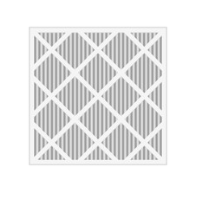
Air FilterReplace Filters

Dirty filters cause a reduction in airflow. This makes your HVAC unit work harder leading to higher operating costs. Replacing your filters on a PM schedule will help keep your coils free from debris, making them more efficient.

Coil Leak Test

Before starting up a coil this season, test it for leaks. Some leaks may be easy to spot, like a split from a freeze-damaged coil. Others may be too small to see. There are several tests you can perform on a coil to test for leaks. The easiest test is the soap test:

  1. Apply soap solution
  2. Watch for bubbles

The formation of bubbles indicates a leak. Address any leaks before they get out of hand and replace coils when necessary to ensure reliability throughout the colder months.

Test Isolation and Control Valves

Valves are used to isolate areas of piping, control both fluid and steam flow, and regulate pressures. Systems are designed to operate at certain parameters. If a valve fails or leaks, those limits could exceed design setpoints for equipment in the system. When a control valve is not operating properly, the equipment it serves (coils, heat exchangers, etc.) will not perform as intended. As heating season nears, you should double-check the operation of all valves in the system.

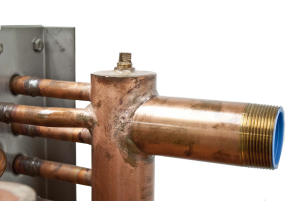
Vent Air from Coils

Drain Port HVAC COil

Air is the world’s best insulator, which is why double-pane windows have a thin layer of air in between the two panes of glass. If there is air inside of a coil or heat exchanger, the heat will not transfer at the same rate. This could result in cold spots, air stratification and/or drop in efficiency.

To remove all air from a coil, make sure to remove the plug from the air vent (typically found near the top of the header of the leaving fluid side) and fill the coil slowly from the lower connection. This will force the air up and out of the air vent.

Replace Broken/Damaged Coils

If your coils are broken or damaged replace them before winter is upon us. Swapping out old inefficient coils will ensure your facility stays warm all winter. When ordering new coils, add Freeze Block Technology to protect your coils from potential freeze damage. You’ll have peace all winter long, knowing your coils are guaranteed by the industry’s best warranty – 30-month protection from freeze damage. Make it a Smart Coil and receive a warning when a freezing event occurs and extend your warranty to 48-months.


No matter what type of facility or heating application you have, Cooney Coil can help! We offer:

  • Free Troubleshooting
  • Engineering Support
  • Expedite Options
  • Selection Experts – to help you achieve the best performance

Call us at 610.783.1136 for any of your commercial or industrial HVAC needs this heating season!

3 Advantages of Hiring Coil Replacement Experts

3 Advantages of Hiring Coil Replacement Experts

This Is Why You Should Contact a Professional for a Coil Replacement

Commercial HVAC systems are more complicated than many realize. There is a reason commercial and industrial HVAC systems are often located in dedicated rooms or outdoor enclosures—they’re quite sizeable machines that occasionally require specialized maintenance.

The larger and more complicated your system is, the harder it can be to find a coil replacement. Commercial and industrial systems are large and often custom-designed specifically for the space they occupy. This customization allows a commercial or industrial air handling system to do exactly what you need for your space, but it also makes repair and replacement more difficult. Luckily, Cooney Coil & Energy is here to help you find the coil replacement you need.

The Professional Coil Replacement Benefits You Don’t Want to Miss

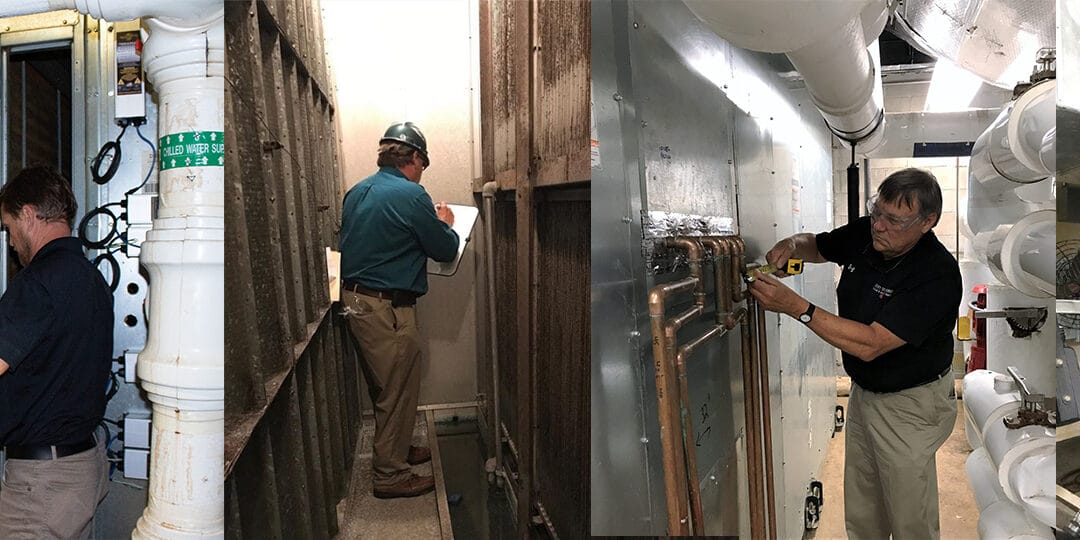
coil replacementThe coil replacement experts at Cooney Coil & Energy understand commercial, customized HVAC systems, and we’re the best in the business. You can trust us to find precisely what you need, when you need it. Here are three advantages you gain by working with us to find your HVAC replacement part.

  • Excellent service. The foundation of what we do here is good service. We believe that our purpose is to help you find the correct HVAC replacement parts and to get your HVAC system operational as quickly and efficiently as we can. That means training employees to have excellent qualifications and certifications, and it means guaranteeing the perfect fit.
  • Quality parts. In our decades of experience in the industry, we’ve learned to distinguish good parts from bad. That’s why we partner with trustworthy, reputable manufacturers. We offer only certain brands of heat exchangers, tube bundles, and coil replacements in our product line. Because we know quality when we see it, our expertise can provide you with a longer-lasting replacement coil.
  • Professional relationships. Another advantage of choosing professional coil replacement is the benefit of networking. At Cooney Coil & Energy, we have personal relationships with HVAC replacement parts manufacturers. That means we can easily navigate your HVAC needs, order custom parts, expedite orders, and more. After years in this industry, our professional network of manufacturers can save you time and money on repairs.

These are just a few of the reasons that you can trust Cooney Coil & Energy to find the right coil replacement for you, every time. If you’d like to learn more about how we operate or what we can do for you, please get in touch with us at 610-783-1136. We look forward to hearing from you!